Posts

101. The Transformative Power of AI

Image
Folks, let’s face it. Our classrooms are going to look a little different this year. AI, specifically ChatGPT, is going to change the way we design learning experiences and assess student mastery. I’ll be honest, when I first explored the ChatGPT platform I was terrified. As I have dug deeper into the technology and its capabilities, I realized that while it does pose significant challenges — it also presents us with some pretty amazing opportunities. In this series, we will explore what AI is capable of, its implications in the classroom, and how it can benefit both teachers and students. Let’s start by examining where we have been, where we are currently, and looking forward to where we are going. Whether this is a trip you wanted to go on or not, the AI train has left the station and it is time for all of us to jump on board. From Card Catalogs to Artificial Intelligence I belong to the micro-generation called Xennial. Xennials are considered to be a “bridge” between Generation X a...

#77: Summer Edition: The Enduring Myth of Learning Styles

Image
In my last post , I shared what should be a shocking statistic. According to my completely un-scientific TikTok poll, 75% of users believe that students have a specific learning style. My results were consistent with a peer-reviewed study conducted in 2012 in which 94% of educators expressed their belief that students learn best when the instructional modality matches their "learning style." Let me be blunt. There is currently no evidence that teaching to a student's learning style will increase his or her performance. If you are an educator, this might come as quite a surprise. I bet you even received training on learning styles at some point in your career. Currently, 29 states  even have questions about learning styles on their teacher-certification exams (Furey, 2022). I want to be clear, this is not a criticism of educators. Not only have many teachers received training on learning styles as part of their teacher preparation programs and professional development t...

#76: Summer Edition: Teachers on TikTok

Image
This summer I focused on stepping up my social media game. I created Blended Learning Journey pages for Facebook and Instagram , utilized social media stories to promote content, launched a website , and even started a TikTok . My target audience differed by platform. Adults tend to use Facebook and Instagram so I geared my posts on these platforms towards other teachers. Students are flocking to TikTok so I made these posts more student-friendly. In this post, I will share with you what I learned this summer! One of the platforms most commonly used by my students is TikTok. Unfortunately, it was also the platform that I had the least experience with and, therefore, was the most intimidated by. In spite of my doubts, I committed to posting one TikTok per day for the entire summer. Go big or go home, right? I began my TikTok adventure by exploring the platform itself. I started out by watching a ton of different videos. Once I familiarized myself with the content, I asked myself the...

#75: Student Well-Being: Power Up Your Teaching

Image
This is PART 7 in a series on student well-being. Throughout this series, I will explore what recent research has revealed about ways to create an environment in which all students can thrive. In my last post , I outlined some of what we know about how people learn. In this post, I will identify concrete ways students and teachers can leverage what we know about how we learn to make learning more effective and efficient. In the book Powerful Teaching , cognitive psychologist Pooja Agarwal and classroom teacher Patrice Bain team up to translate learning theory into classroom practice. They distill the educational research into four evidence-based recommendations that will increase student learning: (1) retrieval practice, (2) spaced practice, (3) interleaving, and (4) feedback-driven metacognition. 1. Retrieval Practice: This strategy focuses on pulling information OUT of students' heads rather than focusing on putting information INTO their heads . I teach AP Psychology and when...

#74: Student Well-Being: The Science of Learning

Image
This is PART 6 in a series on student well-being. Throughout this series, I will explore what recent research has revealed about ways to create an environment in which all students can thrive. For this series, I will be diving into my file of half-written articles and dust-covered books to learn more about topics like mastery learning , youth mental health, culturally responsive teaching and learning , culturally proficient SEL , the use of praise , the science of learning, equity in grading, and universal design of learning. In my last post, I introduced the term academic tenacity . Academic Tenacity consists of the mindset and skills that allow students to focus on long-term or higher order goals. It's about working hard, working smart , and working for a long time . These skills are one piece of the achievement puzzle. There are several other cognitive factors that influence student achievement. Let's take a closer look at what the research says about how people learn ...

#73: Student Well-Being: Praise and Performance

Image
This is PART 5 in a series on student well-being. Throughout this series, I will explore what recent research has revealed about ways to create an environment in which all students can thrive. For this series, I will be diving into my file of half-written articles and dust-covered books to learn more about topics like mastery learning , youth mental health, culturally responsive teaching and learning , culturally proficient SEL , the use of praise, the psychology of learning, equity in grading, and universal design of learning. For the past three decades, researchers have been studying non-cognitive factors affecting student motivation. During this time, Carol Dweck's groundbreaking studies regarding student mindset have rocked the world of education. Her research began with the following question: Why do some students shy away from challenges and give up while others seek out challenges and become more invested in the face of failure? Over the course of six studies, Carol Dweck ...

#72. Student Well-Being: Culturally Proficient SEL

Image
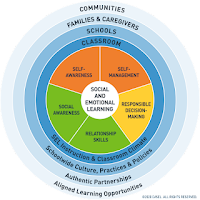
This is PART 4 in a series on student well-being. Throughout this series, I will explore what recent research has revealed about ways to create an environment in which all students can thrive. For this series, I will be diving into my file of half-written articles and dust-covered books to learn more about topics like mastery learning , youth mental health, culturally responsive teaching and learning , culturally proficient SEL, the use of praise, the psychology of learning, equity in grading, and universal design of learning. I've learned that people will forget what you said, people will forget what you did, but people will never forget how you made them feel." -Maya Angelou In my last post, I took a closer look at what Culturally Responsive Teaching & Learning is (and isn't!) within the context of the "Ready for Rigor" framework. The "Ready for Rigor" framework was designed to create the social, emotional, and cognitive conditions necessary for...